g., the superior tax credit or cost-sharing decreases) to these plans. Supplying an off-exchange strategy may permit an insurance company more versatility. For instance, due to the fact that they don't have to offer a strategy at every metal tier, insurers can use just one type of health insurance coverage plan. Ultimately, if you're buying personal health insurance, and you're ineligible for an exceptional tax credit, looking at off-exchange plans gives you more options at potentially lower price points. Employer-provided medical insurance strategies, also called group strategies, are personal plans acquired and managed by your company. Employer-provided plans require to follow the same guidelines as other private insurance coverage strategies and cover the 10 important benefits.
Typically, group strategies have much lower premiums and deductibles. If you're eligible for an employer-provided strategy, you do not require to purchase extra coverage through the market. Speak to your human resources department for more specific information about your plan. Short-term health insurance coverage strategies offer minimal healthcare protection for a temporary gap in coverage. Nevertheless, it's very important to note that short-term health insurance coverage strategies do not count as certifying health coverage, and may not provide you with all the protection you require. Short-term health insurance coverage may still be worth it to cover a short coverage space of one or 2 months for instance, if you searching for a new job or a new task has a waiting duration before your medical insurance kicks in.
However know that short-term health insurance coverage may have limits that routine medical insurance does not have, such as caps on yearly benefits paid. Medicare is a federal health insurance coverage program for Americans above the age of 65. It offers complimentary or greatly cost-reduced healthcare to qualified enrollees. There are 4 parts to Medicare that cover different healthcare services:Part A for inpatient (healthcare facility) care, for which the majority of people pay no premiums Part B, for outpatient care, like physician's workplace gos to. In 2021, Part B has a monthly premium of $148. 50.Part C, which is likewise called Medicare Advantage, and enables you to purchase into private health insurance.Part D, for prescription drug coverage. gov or your state exchange.

Medicaid is a federal and state medical insurance program for low-income households and individuals. Medicaid has eligibility requirements that are set on a state-by-state basis, however it is primarily developed for those with low incomes and low liquid properties. It is also created to help households and caretakers of little kids in need. You can typically examine if you qualify for Medicaid through healthcare. gov or your state exchange. The Children's Medical insurance Program( CHIP) is a federal and state program that is comparable to Medicaid, however specifically created to cover kids below the age of 18. Like Medicaid, you can typically see if you qualify and apply on Health care.
The Definitive Guide for What Is Fdic Insurance
gov or your state's exchange. All private medical insurance strategies, whether they're on-exchange or off-exchange, work by partnering with networks of health care suppliers. But the manner in which these plans deal with the networks can differ significantly, and you want to make certain you comprehend the differences in between these plans.HMO plans are the most restrictive kind of plan when it concerns accessing your network of suppliers.If you have an HMO strategy, you'll be asked to pick a medical care physician( PCP) that is in-network. All of your care will be coordinated by your PCP, and you'll require a recommendation from your PCP to see a specialist. HMO plans typically have less expensive premiums than other kinds of personal medical insurance plans.PPO prepares are the least limiting type ofplan when it concerns accessing your network of companies and getting care from outside the strategy'snetwork. Generally, you have the choice between choosing between an in-network physician, who can you see at a lower expense, or an out-of-network physician at a higher cost. You do not require a referral to see a specialist, though you might still select a main care doctor( some states, like California, might need that you have a primary care physician). PPO strategies usually have more costly premiums than other types of personal medical insurance plans.EPO plans are a mix between HMO plans and PPO strategies. However, EPO plans do not cover out-of-network physicians. EPO strategies usually have more expensive premiums than HMOs, but less costly premiums than PPOs.POS plans are another hybrid of HMO and PPO plans.
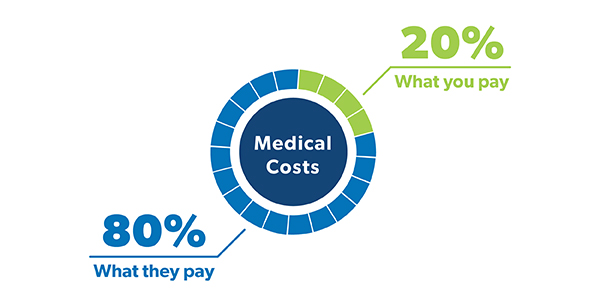
You'll have a primary care provider on an HMO-style network that can coordinate your care. You'll also have access to a PPO-style network with out-of-network options( albeit at a higher expense). The HMO network will be more cost effective, and you will require to get a referral to see HMO experts. POS plans usually have more costly premiums than pure HMOs, but cheaper premiums than PPOs. Discover more about the distinctions between Go to this site HMOs, PPOs, EPOs, and POS plans. Some people get confused since they think metal tiers describe the quality of the strategy or the quality of the service they'll get, which isn't true. Here's timeshare donation to charity how medical insurance prepares roughly split the costs, arranged by metal tier: Bronze 40% consumer/ 60%.
insurance company, Silver 30 %consumer/ 70% insurance provider, Gold 20 %customer/ 80 %insurance company, Platinum 10 %consumer/ 90 %insurance company, These are top-level numbers across the totality of the strategy, taking into account the deductible, coinsurance, and copayments, as dictated by the particular structure of the strategy, based on the expected average use of the plan. These percentages do not take premiums into account. In basic, Bronze strategies have the lowest regular monthly premiums and Platinum have the highest, with Silver and Gold inhabiting the cost points in between. As you can see from the cost-sharing split above, Bronze plan premiums are less expensive since the customer pays more out of pocket for health care services.
If you regularly use healthcare services, you'll probably wind up paying more out-of-pocket if you choose a Bronze strategy, even though it has a lower premium. If you qualify, you can utilize a health insurance premium subsidy to help you manage a plan in a greater tier, eventually conserving you cash. Catastrophic prepares have very high deductibles often, the deductible is the exact same as the out-of-pocket max which indicates they're really only helpful for avoiding an accident or major health problem from triggering Discover more you to go into extreme financial obligation. Catastrophic strategies are only available for individuals under 30 or individuals with a challenge exemption. You can not utilize a subsidy on catastrophic plan premiums, however, for many years throughout which the medical insurance mandate was active, disastrous strategies did count as qualifying health care. When you shop for a medical insurance strategy, it's essential to understand what the essential features are that decide just how much you're actually going to spend for healthcare. What is comprehensive car insurance.